

Disclaimer: This article is based on actual news from the real world – honestly! However, it has been sprinkled with a healthy dose of satire.
In the 1970s, a group of dusty, sleep-deprived scholars rummaging through St. Catherine’s Monastery in Egypt’s Sinai stumbled on a stash of manuscripts the monks apparently “forgot” about for 1,500 years. This was either a monumental accident or the most elaborate ancient prank since someone labeled a large rock “Moses’ Other Ten Commandments.”

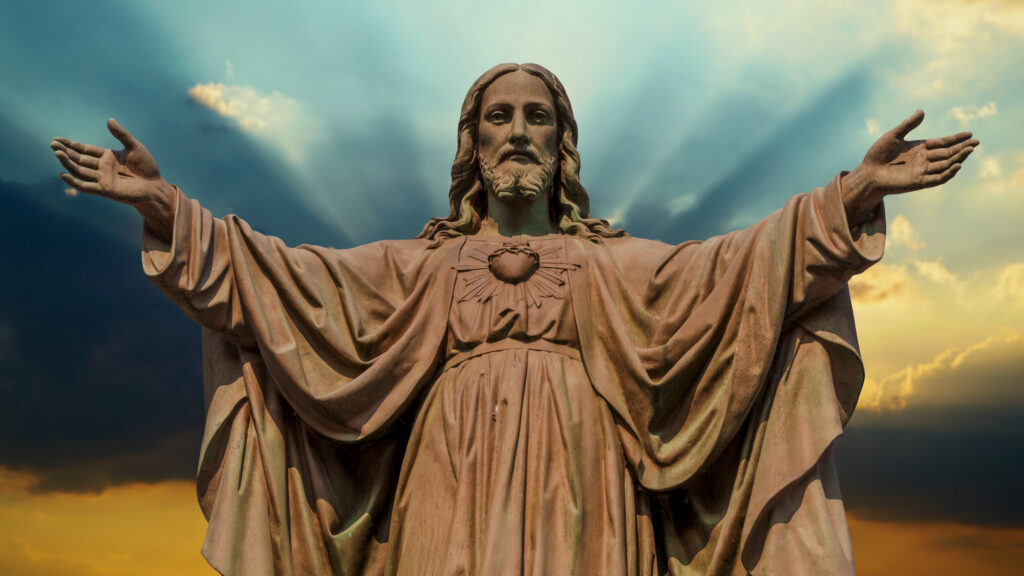
The first rule of Divine Titles: We don't talk about Divine Titles. ( I_g0rZh/depositphotos)
Among the manuscripts was an Arabic translation of the Gospel of Mark, missing one small but very important thing: the phrase “Son of God” in the opening line. Which is like finding the first printing of Moby Dick where “Call me Ishmael” is replaced by “Sup.”
At the time, experts were puzzled, and more than a little concerned by the theological ramifications of such an omission in other ancient copies of the Gospel of Mark. Now, thanks to the magic of phylogenetics, which is actually not magic at all but the science that scientists use to track viruses, it’s now possible to map how scribes’ copies of gospels “evolved” over time. This has revealed fascinating insights into manuscript families, the spread of theology, and, possibly, the true identity of that one scribe who kept doodling wieners in his copies of the Book of Luke.
Dr. Robert Turnbull, who literally wrote the book on this, fed the Arabic text and hundreds of other manuscripts into a supercomputer that previously spent the pandemic modeling COVID mutations. In a shocking twist, the computer didn’t spit out “YOU ARE GOING TO DIE,” but instead drew a big biblical family tree and labeled the problematic Arabic version of Mark as part of the elusive Caesarean text-type group. Named so because it’s basically the theological equivalent of delivering your Gospel doctrine through the roof instead of the front door, if you know what I mean, and I think some of you do.
The omission of “Son of God” doesn’t prove early Christians didn’t think Jesus was divine, just that some communities weren’t putting it in print, which sounds a whole lot like someone’s dodging a massive controversy using a back-flipping technicality. Maybe it was theological nuance. Maybe the abbot had a strict “no divine titles before noon” policy. Maybe Brother Augustine accidentally sneezed in the middle of the sentence, and nobody wanted to scrape it clean.
The whale's eye was this big… no, seriously! (ibrahimkaya.ist/depositphotos)
Now, researchers are applying the same DNA-tracking techniques to everything from Chaucer’s Canterbury Tales to ancient Roman histories, which is exciting because nothing says “party” like a phylogenetic tree of The Wife of Bath’s Tale. And I’m serious, you should see what the original text was like. Half the vocabulary would’ve gotten you thrown out of a Victorian dinner party, and the other half would’ve gotten you arrested. It’s so bawdy that the phrase “marital debt” is basically a punchline with an R-rating. Chaucer was a real rascal. But I digress.
The takeaway? Ancient texts evolved like living things, with changes shaped by human hands, community beliefs, and the occasional scribe who went rogue. Or as Dr. Turnbull might put it: “It’s like the Bible is Wikipedia, except every edit takes three centuries and you have to kill a goat for ink.”
However, it does bring up an interesting problem: what is literally the word of God in the bible if every version has differences? Drop that knowledge bomb at Thanksgiving this year and see what happens.
This story is based on fully factual news, but if we got it wrong, blame these guys, we’re just here to make it funny.